Troubleshooting Car AC Failure in Extreme Heat Without Replacing the Compressor
MotoNaMarket Editorial Team · 2026-08-26
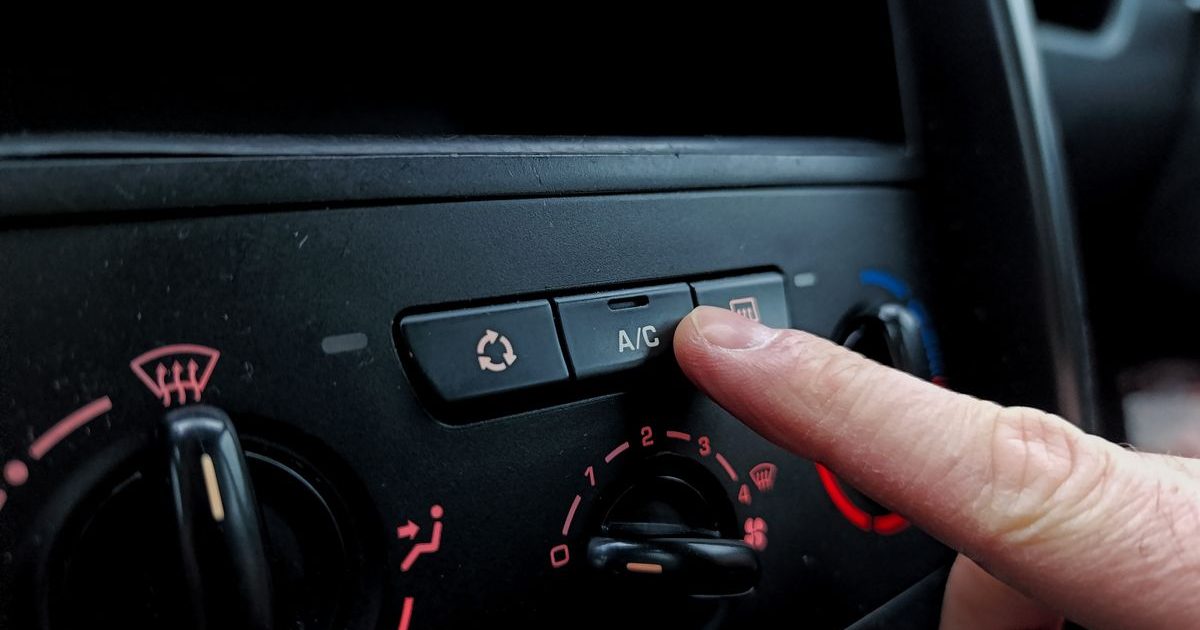
"You need a new compressor" is the most expensive quote and the most often unnecessary. Here are the seven real causes of an AC that stops cooling, in the order you should check them.
In Douala or Yaoundé, a broken air conditioner is not a comfort problem: it is a car you cannot use in the hot hours. It is also the area where quotes run highest and diagnoses are quickest. "You need a new compressor" is the most expensive sentence in the trade — and in most cases it is premature.
Here are the seven real causes, in descending order of likelihood. Have them checked in that order.
How AC works, in three sentences
A refrigerant gas circulates in a closed loop — a fluid whose handling is regulated, as the US Environmental Protection Agency sets out. The compressor pressurises it, the condenser (in front of the radiator) dumps the heat, then the gas expands in the evaporator behind the dashboard, where it absorbs heat from the cabin. A blower pushes air through that cold evaporator.
The consequence matters: if any link fails to do its job, the cold disappears — even with a perfectly healthy compressor.
1. Low refrigerant
By far the most common cause. An AC circuit naturally loses a little gas each year through the seals; at our temperatures and on roads that shake everything, more.
Typical symptom: cooling fades gradually over weeks, then the air is merely cool, then warm. A regas puts it right — but be careful: a regas without a leak search is money thrown away. If the circuit emptied in a few months there is a leak, and it will be back. Insist on a nitrogen or UV dye test.
2. A clogged condenser
The condenser sits in the front line ahead of the radiator, collecting dust, insects, mud and sand. Clogged, it stops dumping heat, pressure rises, and the AC cuts out on safety — often intermittently, which throws the diagnosis off.
Typical symptom: cools well while moving, badly at a standstill and in traffic. That is almost a signature. A careful low-pressure clean fixes many cases and costs next to nothing.
3. The condenser fan
Same symptom as above, same logic: at a standstill the fan replaces the airflow. If it no longer runs (motor, relay, fuse or pressure switch), the AC only holds up while moving. Simple check: engine hot, AC on, the fan should be turning. It is a modest repair, very often mistaken for a compressor failure.
4. A saturated cabin filter
The most mundane cause and the most forgotten. A blocked filter cuts airflow: the AC makes cold, but it no longer reaches the vents.
Typical symptom: the air coming out is cold but weak, often with a smell. In our climate and our dust, this filter needs changing far more often than the handbook says.
5. A frozen evaporator
Too much humidity, a failing temperature sensor or insufficient airflow, and the evaporator ices over. Air stops passing through.
Typical symptom: excellent cooling for twenty minutes, then airflow collapses, and everything is normal again after an hour parked. That characteristic cycle saves you a guessing game.
6. Compressor clutch or electrics
Before the compressor itself there is its electromagnetic clutch, a pressure switch, relays and fuses. A pressure switch cutting out because pressure is too low (back to cause 1) looks exactly like a dead compressor: the pulley spins, the plate never engages, nothing happens.
This is where most unnecessary replacements happen. Ten minutes of electrical checking settles it.
7. The compressor itself
It comes last, and it rarely fails quietly. A genuinely dead compressor makes noise — metallic rumble, whine, jolting — or has visibly seized. If it died from lack of lubrication, the circuit contains metal debris: the receiver-drier must be replaced and the system flushed, or the new compressor will die in turn.
If a quote offers a compressor alone, with no flush and no drier, on a system that has seized, ask the question. That is the second failure, guaranteed.
Maintenance habits that work
- Run the AC at least ten minutes a week, even in the rainy season. That is what keeps the seals lubricated and prevents leaks.
- Change the cabin filter more often than the handbook says.
- Rinse the condenser at low pressure when washing the car.
- Switch the AC off a minute or two before parking, fan only: it dries the evaporator and limits smells.
- Never leave a circuit empty: with no gas there is no oil circulating, and the compressor suffers on restart.
Before accepting a quote
Working air conditioning pays for itself at resale
This is not a comfort detail: 87% of the 347 active listings on MotoNaMarket advertise air conditioning. In that market a dead A/C does not just make you sweat — it drops your car out of the comparison for nine buyers in ten. A regas and a condenser clean cost a fraction of what the fault costs you in negotiation.
Figures taken on 26 August 2026 from 347 active MotoNaMarket listings.
Always ask: what are the measured high-side and low-side pressures? Has the leak been located? Has the condenser fan been tested? Has the cabin filter been looked at? If those four questions have no numerical answer, no diagnosis has been done.
AC that struggles at a standstill often shares its cause with the cooling system, whose condenser sits just ahead of the radiator. Get a written quote and compare. Find a mechanic near you, and for parts see the auto parts marketplace. The same instinct applies to engine oil: a measured diagnosis before any spending.
And on a used car?
Compare parts on the auto parts marketplace before accepting a quote. Always test the air conditioning for at least ten minutes, idling then driving — that is precisely the sequence that exposes causes 2, 3 and 5. Place the asking price with the price estimator too: an AC that needs work is negotiable. An AC that "cools a bit" on the test drive will not cool at all in April. See our 12-point inspection checklist.
Frequently asked questions
My AC cools while driving but not at a standstill — why?
That is the classic symptom of a clogged condenser or a condenser fan that no longer runs. While moving, airflow from the road dumps the heat; at a standstill only the fan does. Have both checked before touching the compressor — they are far cheaper repairs.
Does car AC need regassing every year?
A small annual loss is normal, so periodic regassing is justified. But if the system empties in a few months there is a leak, and regassing without finding it is money thrown away. Insist on a nitrogen or UV dye leak search before any recharge.
Is the compressor usually to blame for AC failure?
Rarely, compared with the other causes. Low refrigerant, a clogged condenser, the fan, the cabin filter and the sensors all come before it. And a genuinely dead compressor makes noise or has seized — if it turns quietly, look elsewhere.
The air is cold but weak — what causes that?
Almost always a saturated cabin filter, especially in our dust. If the filter is clean, consider a frozen evaporator: there, cooling is excellent for about twenty minutes then airflow collapses, and everything returns to normal after an hour parked.
Should I use the AC during the rainy season?
Yes, at least ten minutes a week. It is the circulating gas that carries the oil lubricating the seals and the compressor. A system left unused for months dries its seals out, which causes exactly the leaks you are trying to avoid.
Related articles
- Votre moteur consomme de l'huile : à partir de quand faut-il s'inquiéter ?
- Pompe à essence et injecteurs au Cameroun : quand le carburant encrasse le moteur
- Rotules, triangles et silent-blocs : les pièces que les nids-de-poule tuent en premier
- Joint de culasse au Cameroun : les signes, le coût et quand il vaut mieux vendre