Blown Head Gasket: Symptoms, Cost, and When Selling Beats Repairing
MotoNaMarket Editorial Team · 2026-08-26
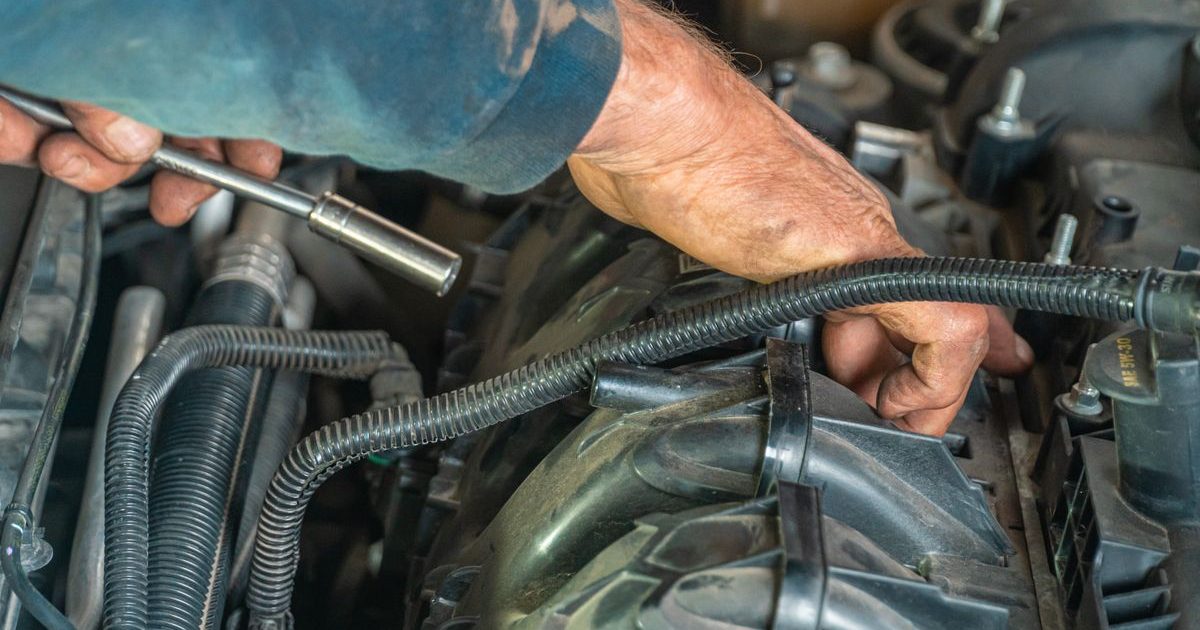
A head gasket is the failure that overheating manufactures. Here are the five signs, what the repair really costs, and the honest calculation between fixing and selling.
Blown head gasket symptoms are unmistakable once you know them. The gasket seals the joint between the engine block and the cylinder head: it separates the combustion chambers, the oil galleries and the coolant passages. When it fails, those three worlds mix — and the engine destroys itself within a few dozen kilometres.
Almost always, the cause is the same: an overheat that was allowed to continue.
The five signs
- Thick, persistent white smoke from the exhaust that does not clear once the engine is warm, with a sweetish smell. That is coolant burning.
- Beige foam under the oil cap or on the dipstick: water has mixed with the oil.
- A falling coolant level with no visible leak under the car.
- Bubbles in the expansion tank with the engine running, or coolant overflowing: combustion gases are entering the system.
- Rapid, repeated overheating, often with power loss and a rough idle.
Any one of these justifies immediate diagnosis. Two together, stop driving.
Confirm before dismantling
A good workshop does not dismantle to find out. It confirms first with a compression test cylinder by cylinder, and a chemical gas test on the expansion tank, which detects combustion gases in the coolant. Both cost little and avoid a pointless strip-down.
If you are offered a head rebuild with no prior testing, ask why.
What the repair really involves
The gasket itself is cheap. What costs is everything around it:
- Labour — removing the cylinder head takes time.
- Skimming or replacing the head if heat has warped it, which is common after prolonged overheating.
- Checking the block, which may also have suffered.
- Ancillary parts: timing belt or chain, hoses, thermostat, and usually the water pump since everything is already apart.
- The original cause — there is no point repairing the gasket without repairing the cooling system that killed it. See our guide to the radiator and coolant.
Repair or sell: the honest calculation
What the car that usually has this problem is worth
This calculation turns entirely on residual value, and the market numbers make it plain. On MotoNaMarket the median is 3 300 000 FCFA for a Toyota Yaris (27 listings, median year 2005) and 4 000 000 FCFA for a Corolla (47 listings, median year 2006). On a car worth that, a badly quoted head job swallows a major share of the resale price: insist on a written quote and a confirmed diagnosis before authorising any strip-down.
Figures taken on 26 August 2026 from 347 active MotoNaMarket listings.
Compare three figures: the full quote, the vehicle's value repaired, and its value as it stands.
- On a high-demand model in otherwise good condition with available parts — Corolla, RAV4, Hilux — repair often makes sense.
- On an older, generally worn vehicle, or one whose parts must be ordered abroad, the quote frequently exceeds what the repaired car will be worth.
Place those values with the price estimator and the price guides by model. If you decide to sell as it stands, say so plainly: a hidden defect discovered after the sale exposes you, and a car advertised as needing engine work finds its buyer at the right price. Auctions suit this case well, where the market prices it better than negotiation.
Preventing it is simple
You do not prevent a head gasket directly: you prevent the overheating that kills it. Check hoses, cap, fan and level at every oil change, never run on tap water long-term, and stop at the first rise of the needle. The difference between stopping immediately and "doing the last twenty kilometres" is exactly the difference between a hose and an engine.
Compare parts on the auto parts marketplace, get a written quote — find a mechanic — and when buying used apply the 12-point checklist, price the repair with the price estimator and browse cars for sale.
The engine fluid specifications that protect these components are documented by the American Petroleum Institute.
Frequently asked questions
What are the symptoms of a blown head gasket?
Thick persistent white exhaust smoke with a sweetish smell, beige foam under the oil cap, a falling coolant level with no visible leak, bubbles in the expansion tank with the engine running, and rapid repeated overheating. One sign justifies diagnosis; two together mean stop driving.
Can a head gasket be confirmed without dismantling?
Yes, and it should be. A cylinder-by-cylinder compression test and a chemical gas test on the expansion tank detect the problem without stripping the engine. Both are inexpensive. A workshop proposing a head rebuild with no prior testing should be able to explain why.
Should I repair or sell a car with a blown head gasket?
Compare three figures: the full quote, the vehicle's value repaired, and its value as it stands. On a high-demand model with available parts, repair often makes sense. On an older car or one with rare parts, the quote frequently exceeds the repaired value.
What causes a head gasket to fail?
Almost always an overheat that was allowed to continue. That is why repairing the gasket without repairing the cooling system that killed it is pointless: hoses, thermostat, fan, cap and radiator must all be checked in the same job.
Can I sell a car with a blown head gasket?
Yes, provided you say so plainly. A hidden defect discovered after the sale exposes you legally, whereas a car advertised as needing engine work finds its buyer at a fair price. Auctions suit this case: the market prices it better than one-to-one negotiation.
Related articles
- Votre moteur consomme de l'huile : à partir de quand faut-il s'inquiéter ?
- Pompe à essence et injecteurs au Cameroun : quand le carburant encrasse le moteur
- Rotules, triangles et silent-blocs : les pièces que les nids-de-poule tuent en premier
- Radiateur, durites et liquide de refroidissement : l'entretien qui évite la casse