Choosing Engine Oil Viscosity for a Hot Tropical Climate
MotoNaMarket Editorial Team · 2026-08-26
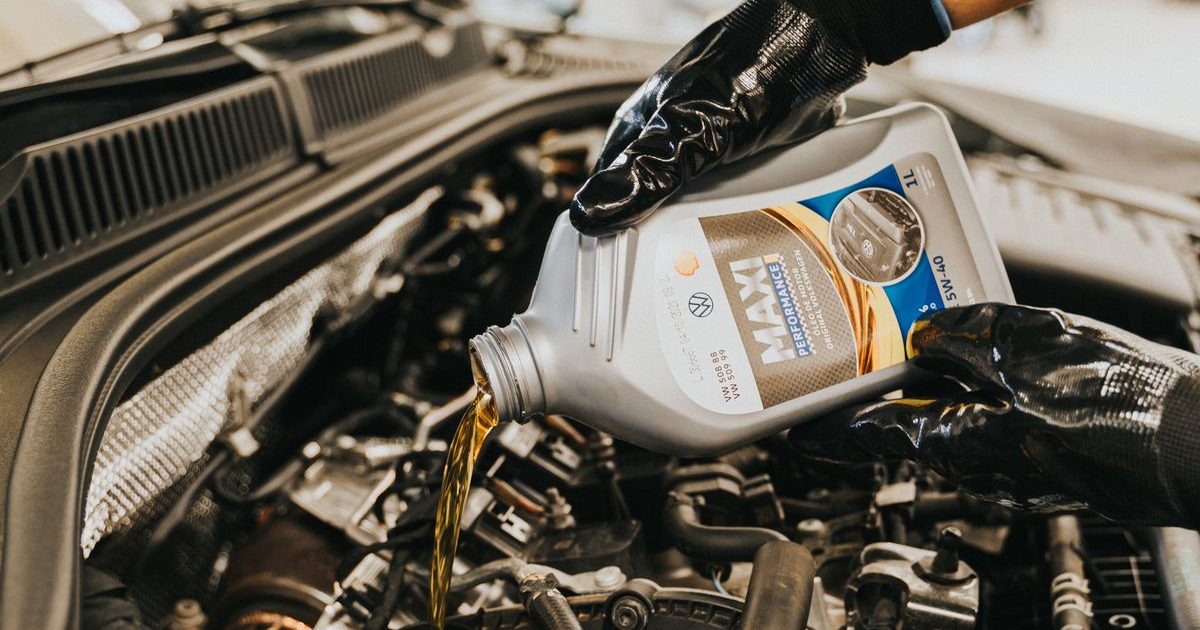
At 32 °C and in dust, oil does not age as it does in Europe. Here is how to read a viscosity grade, which oil suits your engine, and why the handbook interval is often too long here.
"Which oil should I use?" is the most-asked maintenance question and the most badly answered. There is no single best engine oil for a tropical climate — there is the grade your engine was designed around, changed more often than the handbook says. You often hear that "in Cameroon you need thick oil because of the heat". The intuition is understandable, and for most modern engines it is wrong. Here is what the numbers on the bottle actually mean.
Reading a viscosity grade
A 10W-40 oil carries two numbers describing two different situations. These grades are defined by international standards, including those of the American Petroleum Institute (API).
- The number before the W (Winter) describes flow when cold, at start-up. The lower it is, the more fluid the oil stays when the engine is cold and the faster it reaches the moving parts.
- The number after the dash describes viscosity when hot, at operating temperature — around 100 °C, whatever the outside climate.
Hold on to that point, because it undoes the myth: a running engine sits at its regulated temperature, not at air temperature. An engine in Douala and the same engine in Lyon both work around 90–100 °C. Ambient heat alone therefore does not justify a thicker oil.
What the heat actually changes
The tropical climate affects three things, and none of them is called "hot viscosity":
- Thermal margin. With 32 °C outside, the AC always on and stop-start traffic, the cooling system is working at its limit. A clogged radiator or a tired fan pushes oil temperature beyond what was designed for — and that is where the hot grade earns its keep.
- Oxidation. Oil ages faster the longer it stays hot. Its useful life is shorter here than in a temperate climate at the same mileage.
- Dust. The most underestimated factor by far. In dry season and on unpaved roads the air filter loads quickly, and the particles that get past contaminate the oil long before its mileage is up.
Which viscosity for which engine
What the real fleet looks like
The advice changes with engine age, and the Cameroonian fleet leans hard one way: the median car for sale on MotoNaMarket is a 2014 with 95 000 km, and 54% of listings are Toyotas. Most readers of this article are running a ten to fifteen year old petrol engine past 90,000 km — the profile that copes badly with an over-thin oil and no longer needs the factory 5W-30.
Figures taken on 26 August 2026 from 347 active MotoNaMarket listings.
Rule number one
Always start from the grade specified in the handbook or on the filler cap. A modern engine with variable valve timing or hydraulic lifters is designed around a thin oil: putting 20W-50 in it "because it is hot" reduces pressure at the fine points, slows lubrication at start-up and can trigger timing faults.
5W-30 and 5W-40 — recent engines (broadly post-2010)
This is what most recent petrol engines require, here included. The 5W at start-up protects at the moment when wear is greatest, and the 30 or 40 hot matches the manufacturer's calculation. In a full synthetic, oxidation resistance is markedly better — a genuine advantage in this climate.
10W-40 — the most common compromise
Suits a very large number of 2000s engines, petrol and diesel, and is easy to find anywhere in Cameroon. It is the reasonable default when the handbook is long gone and the engine is neither very new nor very worn.
15W-40 and 20W-50 — older or high-mileage engines
These have a real place: older engines designed for them, or badly worn engines whose internal clearances have opened up, where a thicker oil maintains pressure and reduces oil consumption. 20W-50 is also common in some commercial diesels. What it is not is a universal "tropical" solution — on a recent engine it is a mistake.
How often to change it, really
Manufacturer intervals (often 10,000–15,000 km) assume clean roads, consistent fuel quality and mostly highway use. Here, three factors shorten oil life: heat, dust, and urban stop-start use where the engine runs while the odometer does not.
In practice, on mixed Cameroonian use:
- Mineral oil: around 3,000–4,000 km.
- Semi-synthetic: around 5,000 km.
- Full synthetic: 7,000–8,000 km, rarely beyond.
And above all: change the oil filter at every oil change, and the air filter far more often than the handbook says if you drive on unpaved roads or in dry season. A saturated air filter lets dust in, and dust kills oil faster than kilometres do.
Spotting poor-quality oil
The market does contain counterfeits. A few habits:
- buy a sealed container, never loose litres from an open drum;
- check for API and ACEA standards on the label (for example API SN, ACEA A3/B4) — an oil with no standard reference has no verifiable specification;
- be suspicious of a price far below market for a known brand;
- look at the used oil at the next change: oil that goes black in 500 km or smells burnt did not hold up.
Signs that the problem is not the oil
If your oil level drops quickly, if the oil degrades abnormally fast, or if the pressure warning lights up, the grade is not the issue. Have the cooling system checked, the turbo if fitted, and the engine's sealing. Find a mechanic near you for a diagnosis before overheating costs you a head gasket.
The right oil does not compensate for a tired cooling system: see radiator and coolant, and price any repair with the price estimator. A well-lubricated engine counts for little if the suspension breaks: see also our guide to suspension care. Before buying used, the 12-point inspection checklist will stop you inheriting a badly maintained engine. For filters, oil and consumables, see the auto parts marketplace. And if you are still choosing a vehicle, our guide to fuel-efficient and durable cars in Cameroon covers the models that stay affordable to maintain.
Frequently asked questions
Do I need thicker oil in Cameroon because of the heat?
No, not for that reason. A running engine sits at 90–100 °C whatever the outside temperature, so the hot grade stays the one the manufacturer specifies. What the heat changes is how fast the oil ages — which means shorter intervals, not thicker oil.
What do the numbers in 10W-40 mean?
The number before the W describes cold flow at start-up: the lower it is, the faster the oil reaches the moving parts. The number after the dash describes viscosity at operating temperature, around 100 °C. So a 10W-40 is thicker cold than a 5W-40, but identical hot.
How often should I change the oil in Cameroon?
More often than the handbook says. On mixed Cameroonian use, budget roughly 3,000–4,000 km on mineral oil, 5,000 km on semi-synthetic and 7,000–8,000 km on full synthetic. Change the oil filter every time, and the air filter far more often if you drive unpaved roads.
Can I use 20W-50 in a recent engine?
No — this is a common mistake. Recent engines with variable valve timing or hydraulic lifters are designed around thin oil. A 20W-50 reduces pressure at the fine points, delays lubrication at start-up and can cause timing faults. 20W-50 remains useful on older or badly worn engines.
How do I spot counterfeit oil?
Always buy a sealed container, never loose litres from an open drum. Check for API and ACEA standards on the label: oil with no standard reference has no verifiable specification. A price well below market for a known brand is a reliable warning sign.
Related articles
- Votre moteur consomme de l'huile : à partir de quand faut-il s'inquiéter ?
- Pompe à essence et injecteurs au Cameroun : quand le carburant encrasse le moteur
- Rotules, triangles et silent-blocs : les pièces que les nids-de-poule tuent en premier
- Joint de culasse au Cameroun : les signes, le coût et quand il vaut mieux vendre