How to Start a Car Wash Business in Cameroon: 2026 Costs & Profitability
MotoNaMarket · 2026-05-03
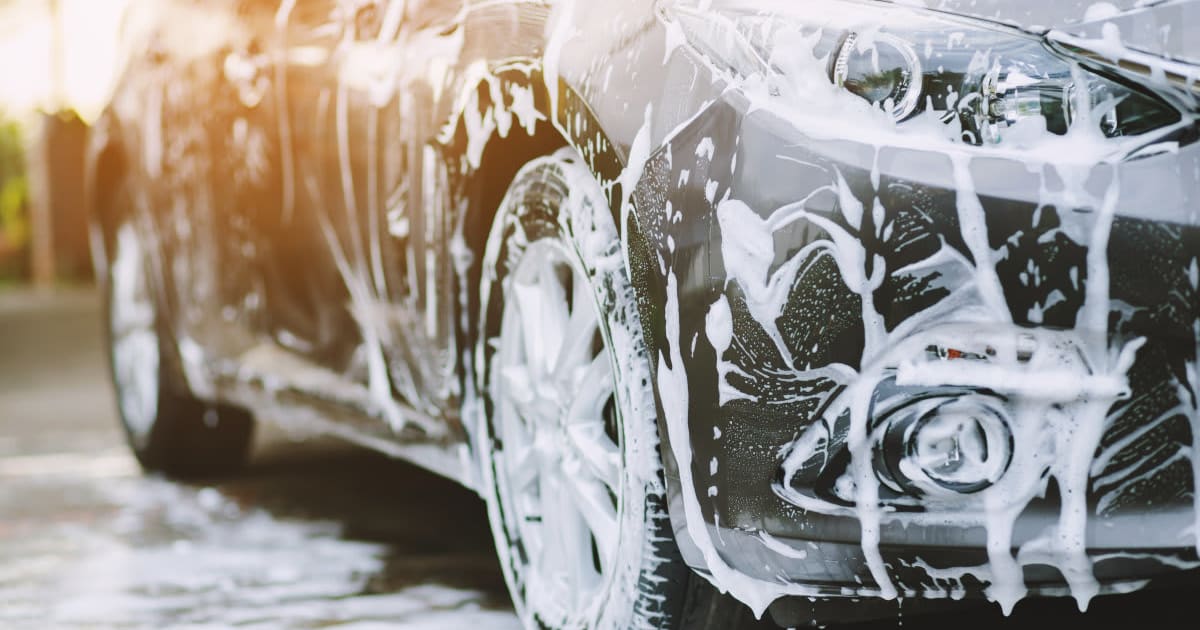
Starting a car wash is one of the most accessible and lucrative business opportunities in Cameroon in 2026. With a well-managed initial investment, discover how to launch your station in Douala or Yaoundé, build a loyal customer base, and generate over 1 million FCFA in net monthly profit.
How to Start a Car Wash Business in Cameroon: 2026 Business Guide
A car wash is one of the most accessible businesses for an aspiring entrepreneur in Cameroon. It requires no specialized degree, no massive commercial space, and no astronomical startup capital. A prime location, a few basic pieces of equipment, and a steady stream of customers are all it takes to generate a stable income within your first few weeks.
However, between the initial idea and reality, there are critical figures you need to master. How much does it really cost to get started? How much can you earn per day in Douala or Yaoundé? And most importantly—how fast will your initial investment be paid back?
This 2026 business guide answers all your questions with concrete data from the local Cameroonian market.
1. Why a Car Wash is a Solid Opportunity in Cameroon in 2026
The Cameroonian automotive market is growing steadily. In Douala, Yaoundé, and Bafoussam, rapid urbanization and the state of the roads (often dusty during the dry season and muddy during the rainy season) create a natural, daily, and recurring demand for vehicle cleaning.
Several structural factors support this market:
A Growing Middle Class: The number of vehicles per capita increases every year in urban zones, continuously expanding your target customer base.
Favorable Seasonality: The rainy season (from March to November in the southern regions) triggers a major peak in activity, as muddy roads soil car bodies instantly.
A Recurring Business Model: Car washing is a high-frequency service. A satisfied customer returns an average of 1 to 2 times a month to maintain their vehicle.
Unlike a traditional retail store that must constantly find new buyers for one-off products, a car wash builds a loyal client portfolio, guaranteeing regular and predictable revenues.
2. The Three Car Wash Models: Choose Your Positioning
Before setting up your budget, you must define your operational model. Three main options exist on the Cameroonian market:
Model 1 — The Traditional Manual Car Wash
This is the most basic setup: water, soap, sponges, chamois cloths, and a nearby water source. This street-side model is common in local neighborhoods, often operated under a tree or in a residential courtyard.
Advantage: Extremely low startup cost, immediate launch.
Inconvénient: Limited volume, low-end brand image, and very slim margins.
Model 2 — The Semi-Automated Car Wash with Compressor
This is the recommended configuration for serious entrepreneurs. It integrates an air compressor, a high-pressure water gun (electric or gas-powered pressure washer), and a layout designed to wash multiple vehicles simultaneously.
Advantage: Excellent service quality, higher rates, time efficiency, and increased volume capacity.
Inconvénient: Dependence on a stable power source (electricity grid or generator).
Model 3 — The Premium Car Wash and Detailing
This high-end segment focuses on value-added services. In addition to standard washing, you offer body polishing, deep seat shampooing, engine degreasing, wheel rim treatments, and ceramic coatings. This format targets owners of new or luxury vehicles.
Advantage: Very high profit margins, premium clientele with low price sensitivity.
Inconvénient: Heavy initial investment and a need for highly skilled labor.
Our Recommendation: For a first launch, the semi-automated model (Model 2) represents the best compromise between financial accessibility and profitability. This is the model detailed throughout the rest of this guide.
3. What is the Startup Budget for a Car Wash in Cameroon?
Here is a realistic financial simulation to launch a semi-automated car wash in Douala or Yaoundé in 2026, based on current local supplier prices.
3.1 Essential Professional Equipment
Equipment | Estimated Price (FCFA) |
Air compressor (50 to 100 liters) | 150,000 – 250,000 |
High-pressure water gun (Kärcher / gas-powered) | 80,000 – 150,000 |
Hoses, fittings, and lances (15–20 meters) | 30,000 – 50,000 |
Industrial vacuum cleaner (interior injection/extraction cleaning) | 80,000 – 130,000 |
Small tools (Sponges, chamois cloths, brushes, buckets, basins) | 35,000 – 60,000 |
Total Equipment | 375,000 – 640,000 |
3.2 First-Month Consumables
Expense Item | Monthly Budget (FCFA) |
Car shampoo / Concentrated liquid soap | 15,000 – 25,000 |
Specific products (Tyre shine, plastic restorer, glass cleaner) | 10,000 – 20,000 |
Finishing products / Quick polish spray | 20,000 – 40,000 |
Water supply (Camwater connection or water tanker) | 10,000 – 20,000 |
Total Consumables | 55,000 – 105,000 |
3.3 Setup Costs and Launch Expenses
Item | Estimation (FCFA) |
Site layout (Concrete slab, painting, signage) | 50,000 – 150,000 |
Electrical and plumbing connections | 30,000 – 80,000 |
First month of rent (depending on the geographical area) | 50,000 – 200,000 |
Legal registration formalities (RCCM, operating permit) | 50,000 – 80,000 |
Initial working capital (cash flow buffer) | 100,000 – 150,000 |
Total Startup Expenses | 280,000 – 660,000 |
Total Investment Synthesis
Minimal Budget (Second-hand equipment, simple infrastructure): 600,000 – 800,000 FCFA
Standard Recommended Budget (New equipment, prime location): 1,000,000 – 1,500,000 FCFA
Premium Budget (Full detailing offer, furnished space with waiting area): 2,000,000 – 3,500,000 FCFA
Practical Tip: If your finances are tight, opt for reputable second-hand equipment brands. The markets in Douala (especially around Bonabéri) are full of used compressors and pressure washers at excellent prices. Never compromise on the quality of the compressor: it is the heart of your business.
4. Revenue and Income: How Much Can You Earn?
The profitability of a car wash depends directly on the volume of vehicles cleaned and the pricing grid applied.
Average Rates Applied in Douala and Yaoundé
Type of Service | Average Rate (FCFA) |
Exterior wash (City car / Sedan) | 1,500 – 2,500 |
Full wash: Exterior + Interior (Sedan) | 3,000 – 5,000 |
Full wash SUV / 4x4 / Pick-up | 5,000 – 8,000 |
Van / Utility vehicle wash | 4,000 – 7,000 |
Technical engine bay cleaning | 5,000 – 10,000 |
Full bodywork restoration / Polish | 15,000 – 35,000 |
Daily Revenue Projections
At cruising speed, a well-organized team of two employees can easily handle between 15 and 30 vehicles per day.
Conservative Scenario (15 vehicles per day):
10 basic washes at 2,000 FCFA = 20,000 FCFA
5 full washes at 4,000 FCFA = 20,000 FCFA
Daily total: 40,000 FCFA
Realistic Scenario (20 vehicles per day):
12 basic washes at 2,000 FCFA = 24,000 FCFA
6 full washes at 4,500 FCFA = 27,000 FCFA
2 SUVs / 4x4s at 6,000 FCFA = 12,000 FCFA
Daily total: 63,000 FCFA
Optimal Scenario (25 to 30 vehicles per day + 1 premium service):
Diverse washing services volume = ~90,000 FCFA
1 body polish service = 20,000 FCFA
Daily total: ~110,000 FCFA
Monthly Financial Statement (Base: Realistic Scenario, 26 working days)
Budget Item | Monthly Amount (FCFA) |
Gross Revenue | ~1,638,000 |
Land / Space Rent | – 80,000 to – 150,000 |
Payroll (1 to 2 fixed employees + commissions) | – 70,000 to – 120,000 |
Water + Electricity Bills (Eneo / Camwater) | – 30,000 to – 50,000 |
Restocking chemical consumables | – 55,000 to – 105,000 |
Provisions for maintenance and unforeseen events | – 30,000 |
Estimated Net Monthly Profit | ~1,100,000 – 1,350,000 FCFA |
5. Location: The #1 Factor for Success
If you must focus your efforts and budget on a single element, make it the location. Excellent equipment will never save a poorly positioned site.
Essential Criteria for a Great Plot of Land
Traffic Flow: Set up on major, high-traffic thoroughfares. Direct approaches to gas stations, busy market exits, high-traffic intersections, and entries to dynamic residential neighborhoods are perfect.
Visibility: Drivers must see your signage from afar. A clear, wide storefront, a bright sign, and a washing bay visible from the road stimulate impulse purchases.
Access to Water Resources: This is your primary raw material. A direct connection to the public grid or the ability to install large-capacity storage tanks (1,000 liters and above) is mandatory.
Holding Capacity: Your space must allow at least 2 cars to be washed simultaneously while offering a secure waiting area for 4 to 6 vehicles. If a customer sees a congested space, they will keep driving.
Strategic Geographic Areas in Cameroon
In Douala: The sectors of Akwa, Bonapriso, Bonanjo, Makèpè Missoké, as well as the main routes leading to the airport or the Bassa industrial zone (great opportunity for trucks and commercial vehicles at higher rates).
In Yaoundé: Bastos, Omnisports, and Mvan neighborhoods, alongside peripheral roads near ministries and administrative hubs where an active population with strong purchasing power is concentrated.
Gold Rule: Before paying any deposit for a commercial lease, spend two full days on-site manually counting the number of cars passing by at different hours.
6. Administrative and Regulatory Formalities
To operate your wash station smoothly and avoid administrative closures, you must formalize your business:
The Commercial Registry (RCCM): Obtained from the Commercial Court or via the Business Creation Guichet Unique (CFCE). This registration is required to deal with corporate clients (companies outsourcing their fleet washing) and to open a professional bank account.
The Municipal License (Patente): This is the annual professional tax paid to your local council arrondissement. The amount depends on the scale of your business.
The Operating Authorization: Some municipalities in Cameroon closely regulate businesses that consume large amounts of water and generate wastewater. Inquire with the technical services of the local town hall before starting work.
Environmental Management: Design an adequate drainage system (gutters, soakaways, or settling pits to retain oil and sludge) to prevent neighbor disputes and fines from municipal hygiene services.
7. Calculating the Return on Investment (ROI) Timeline
Let's look at a standard investment scenario of 1,200,000 FCFA with a stabilized net monthly profit of 1,100,000 FCFA.
This is one of the highest profitability ratios in the small and medium enterprise (SME) sector in Cameroon. By comparison, a clothing boutique or a restaurant typically takes 6 to 18 months to recover their initial outlay.
Note: In practice, factor in a launch phase of 1 to 2 months to build local brand awareness and stabilize your daily vehicle traffic.
8. Marketing Strategies to Retain Customers and Outpace Competitors
The car wash sector is competitive. To stand out from informal washers, apply these modern methods:
Absolute Respect for Deadlines: If a busy customer leaves their car and requests delivery within 45 minutes, keep your word. Punctuality is the key argument for winning over executives and professionals.
Site Cleanliness: A clean, orderly car wash, free of stagnant puddles and featuring a shaded waiting area with comfortable seating will keep the best clients coming back.
A Physical Loyalty Card: Offer a simple cardboard stamp card: after 9 washes, the 10th one is free. While classic, this technique is incredibly effective and vastly under-utilized in Cameroon.
The Power of WhatsApp Business: Use WhatsApp to communicate with your local customers, offer flash promotions on slow midweek days, or offer discounts to customers who refer friends and family.
Summary of Key Metrics
Financial / Operational Metric | Estimated Value (FCFA) |
Minimal Initial Investment | 600,000 – 800,000 FCFA |
Standard Recommended Investment | 1,000,000 – 1,500,000 FCFA |
Average Daily Revenue | 50,000 – 70,000 FCFA |
Estimated Net Monthly Profit (Steady State) | 900,000 – 1,350,000 FCFA |
Average Return on Investment Timeline | 5 to 8 weeks |
Target Vehicles Per Day | 18 to 25 cars |
Related Reading on Our Site:
How to Start a Car Rental Agency in Cameroon: 2026 Business Guide
Car Insurance in Cameroon: 2026 Rates & Best Companies
Car Customs Clearance at the Port of Douala: Complete 2026 Guide
Car Leasing in Cameroon: Banks and Financing Companies Compared
> Legal Disclaimer: This article was written in 2026. Prices, equipment costs, and service rates are estimates based on the current state of the Cameroonian market and can fluctuate depending on regions, economic trends, and supplier pricing adjustments.
Related articles
- Mettre sa voiture en location au Cameroun : combien ça rapporte vraiment
- Hybride, électrique ou essence : la mobilité verte est-elle viable à Douala et Yaoundé ?
- Voitures chinoises au Cameroun (BYD, Jetour, Soueast) : prix, pièces et fiabilité
- Importer une voiture au Nigeria : comment fonctionne le régime douanier